Dental Practice Marketing: What's Working in 2026
It starts with a toothache, a phone, and a Facebook ad — and ends with either a booked patient or a wasted click. Here's what separates the two right now.
Meta's AI now handles targeting for dental ads — your job is a tight 10–15 mile radius, a trust-building creative hook, treatment-specific landing pages, and a budget that's 3–5x your target cost-per-lead so you actually exit the Learning Phase. Manual targeting beats Advantage+ Shopping here, because dental care is a local, appointment-based service, not e-commerce.

It starts with a toothache
It's 9 PM. Someone's tooth has been throbbing since dinner. They're not browsing dentist websites, comparing staff bios, or reading blog posts about flossing technique. They pull out their phone, open Facebook, and see an ad with a bold headline: "Tooth pain? We have emergency appointments available today." One tap, and they're calling.
That's a click-to-call ad doing exactly what it's built for — removing every step between the problem and the phone ringing. No form, no landing page to read, no decision fatigue. When someone's in real pain, a click-to-call ad instantly captures the highest-intent patient a dental practice will ever see.
That scenario is also the fastest way to understand what changed in 2026: the ad didn't work because of clever interest targeting. It worked because the hook matched the exact moment someone was in. That's the whole game now.
Why your creative is now your targeting
In 2026, Meta's algorithm does the heavy lifting. If you're still manually targeting "people interested in toothpaste," you're burning cash. The AI is smarter than an interest list — but only if you feed it a strong creative hook to filter with.
Because you're targeting broadly, your video or image becomes the filter. An ad that asks, "Hiding your smile in photos?" naturally attracts only locals who are insecure about their teeth. Short-form video works especially well here — a 15-second Reel of a real patient's new smile builds trust instantly, in a way a static image or a paragraph of copy can't.
"People need to trust you before they let you near their mouth. A 30-second clip of a real patient talking about their experience builds that trust faster than anything else you can run."
The 2026 dental Facebook Ads playbook
Here are the six strategies behind that shift.
| Strategy | Why It Matters |
|---|---|
| Broad targeting + strict geo boundaries | Set the age and gender, and a 10–15-mile radius around the clinic, then let Meta find people who need a cleaning or Invisalign. Use manual targeting, not Advantage+ Shopping — dentistry needs precise local boundaries ASC isn't built for. |
| Server-side tracking (CAPI) | Browsers and iPhones block cookies now. CAPI sends booking data straight from your server to Meta's, so you're not missing data the old Pixel alone would lose. |
| 1% Lookalike audience | Upload your best high-ticket patients — veneers, implants — as a Custom Audience, and let Meta find the top 1% of people in your city who behave like them. |
| Strategic exclusions | Exclude existing patients from "New Patient Special" campaigns. Don't pay to show a new-patient offer to someone who's been coming in for 5 years. |
| High-intent lead forms | Add 1–2 qualifying questions — "Which treatment are you interested in?", "When would you like to come in?" — to filter out window-shoppers with minimal friction. |
| Price-forward creative on high-ticket items | Sticker shock kills conversions on implants. Lead with financing — "$99/month for a new smile" — instead of the total cost, and remove the price objection before it's raised. |
The retargeting play: the high-ticket smile makeover
Emergency ads catch people at the moment of pain. But your highest-value treatments — Invisalign, implants, full smile makeovers — usually need a second touch.
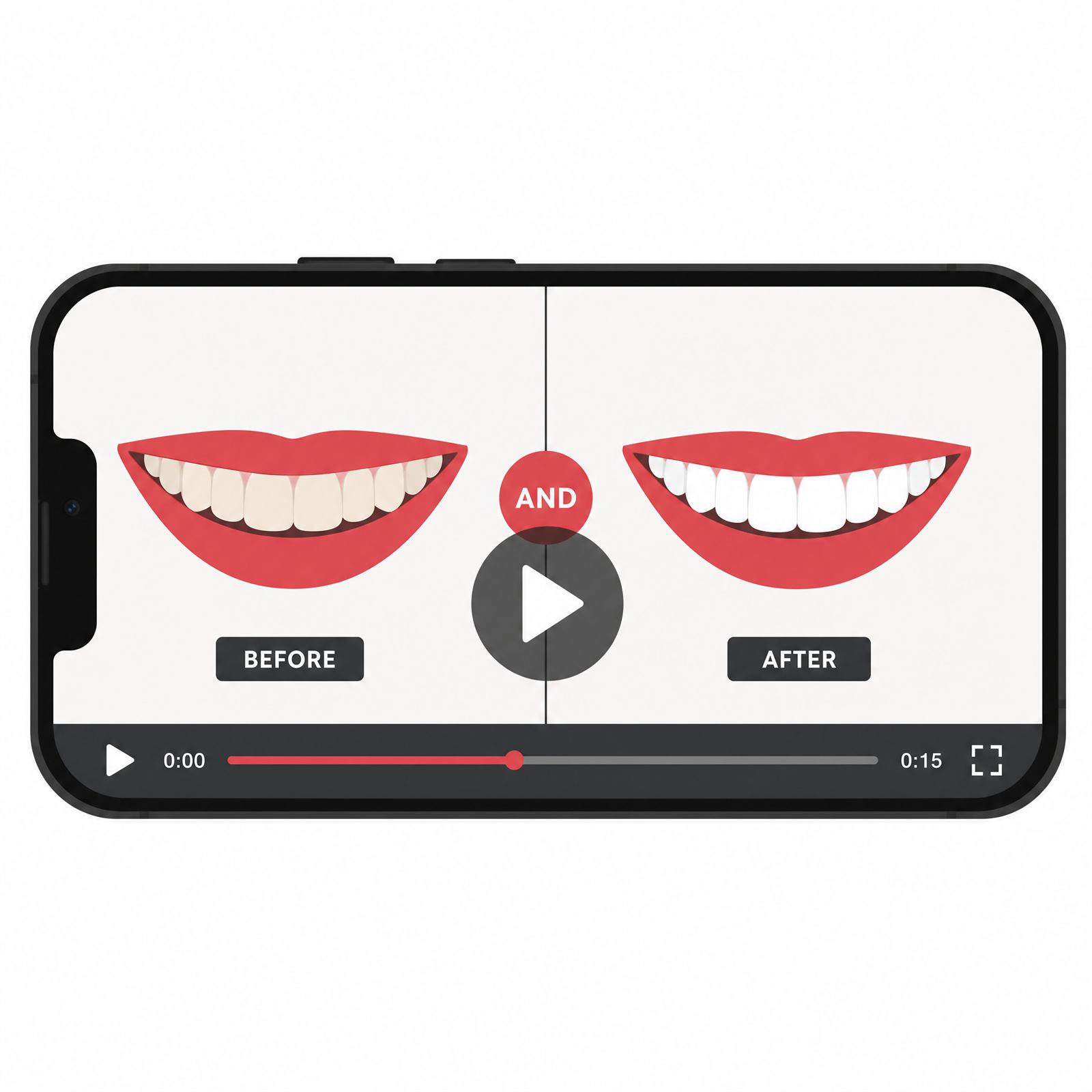
- The setup: a retargeting campaign aimed at people who visited your website's Invisalign page but didn't book.
- The creative: a short-form Reel showing a time-lapse of a patient's smile transformation, captioned with a $99/month financing plan.
- The result: familiarity plus a fresh financing hook is usually enough to convert a fence-sitter into a booked consultation — they already know who you are, so the ad just needs to remove the last objection.
The 5 mistakes burning your cash
- The "Tinkerer" trap. Checking your ads daily, changing the budget by more than 20%, or swapping the video resets Meta's Learning Phase to zero. Launch it and leave it alone for at least 7 days.
- Sending traffic to your homepage. Someone clicks an Invisalign ad and lands on a homepage with 25 dropdown menus, staff bios, and blog posts — they get confused and leave. Send them to a landing page built for exactly that treatment.
- Choosing the wrong campaign objective. "Traffic" gets you people who love clicking links but never fill out a form. If you want booked appointments, choose the Leads or Sales objective.
- Ignoring offline sales. A dental treatment closes in the clinic, not on Facebook. Feed "Closed Won" status back through the Conversions API, or Meta has no idea which ads actually made you money.
- Hiding the price on high-ticket items. Sticker shock kills conversions on implants and similar treatments — lead with the financing number, not the total, and the objection never gets a chance to form.
Budget, the Learning Phase, and landing pages
- The Learning Phase: a new ad enters a testing period while Meta figures out who wants your service. To exit it and get stable, cheap costs, Meta needs exactly 50 optimization events within a 7-day window.
- The $50 minimum: your daily budget needs to be 3 to 5 times your target cost per lead. Targeting $15 dental leads means budgeting $45–$75 a day minimum — spend $10 a day and you'll never hit the 50 leads needed, and the campaign gets permanently stuck.
- City selection: nobody drives an hour for a routine cleaning. Keep the radius tight — 10 to 15 miles — and let the algorithm go completely broad inside that boundary.
- Landing pages: use a dedicated page for every specific treatment. Strong headline, real patient photos (not stock), trust signals like credentials and Google reviews, and a simple booking form — nothing more.
DeployStaff builds the manual targeting, CAPI setup, and treatment-specific landing pages dental practices need to actually book consults.
See How Dental Marketing WorksFlat fee, no long-term contracts. Get a free campaign plan.
Fast FAQs
Get a free campaign plan tailored to your service radius and highest-value treatments.
Get a Free Campaign Plan$95/week per channel. See how it works.
DeployStaff runs flat-fee Meta and Google Ads campaigns for dental practices, med spas, roofers, and restaurants — built around whatever the current platform algorithm actually rewards, not what worked two years ago.