The Home Service Owner's Guide to Getting Cited by AI in 2026
A flooded basement, a panicked homeowner, and one AI answer. Here's how a roofer, a landscaper, and a mover each went from invisible to the recommendation.
When a homeowner asks an AI assistant for a plumber, mover, or roofer, it gives one direct, cited answer — not a list of links. Getting picked requires GEO (Generative Engine Optimization): allowing the right AI search bots through your firewall, writing short answer-shaped sections instead of keyword-stuffed pages, backing claims with real numbers, and earning genuine brand mentions instead of chasing backlinks.
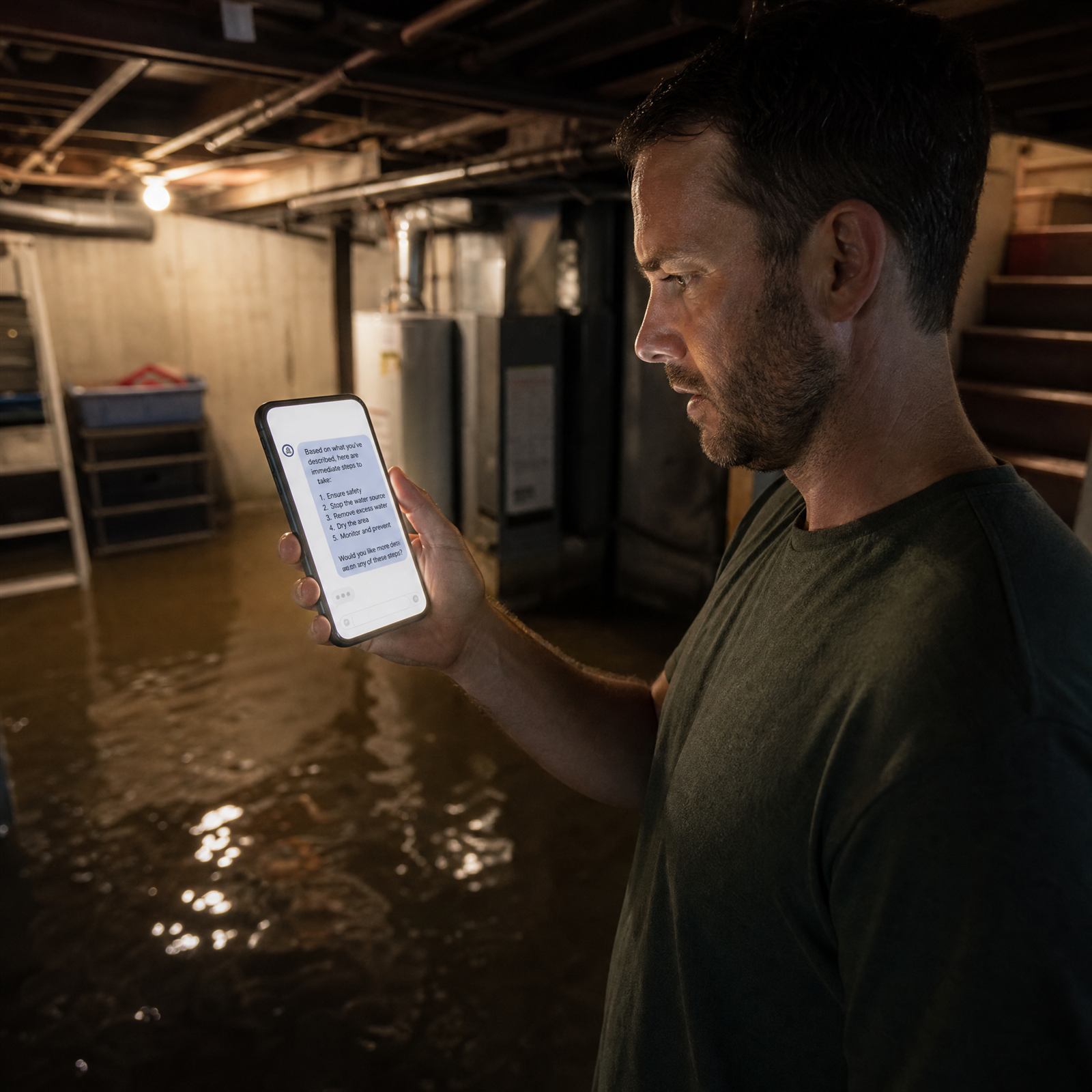
Picture this: a homeowner's basement just flooded. In the old days, they'd have opened Google, typed "plumbers near me," and scrolled through a long list of blue links.
But it's 2026. Instead of scrolling, that panicked homeowner opens their phone and says, "Hey ChatGPT, what's the best emergency plumber open right now with a response time under an hour?"
The AI doesn't hand them ten websites. It reads the internet, thinks for a second, and gives one direct answer: "You should call Bob's Plumbing. They have a 45-minute emergency response time and are highly recommended by local neighbourhood groups."
If you own a home service business — roofing, landscaping, moving — and you weren't the business the AI just recommended, you're invisible.
The game has shifted from SEO to GEO: Generative Engine Optimization. Instead of ranking your website in a list of links, the goal is getting your business retrieved, trusted, and directly cited inside the AI's answer. Let's walk through the problem, bust a few major misunderstandings, and turn your business into the recommendation.
The problem: why is the AI ignoring you?
For years, digital marketing for home services was all about traditional SEO — paying an agency to stuff your website with keywords like "best roofer in Chicago" and build hundreds of random backlinks.
AI engines like ChatGPT, Google's AI Overviews, and Perplexity don't think like old search engines. They actually read your website looking for factual answers. If your site is a giant wall of keyword-stuffed text, the AI gets confused and ignores you. Worse — sometimes your own website's firewall accidentally blocks the AI from visiting the page at all.

Interactive Pop Quiz: The Great AI Misunderstandings
Before we meet our home service heroes, test yourself. True or false? Tap a statement to see the answer.
Three businesses, three big wins
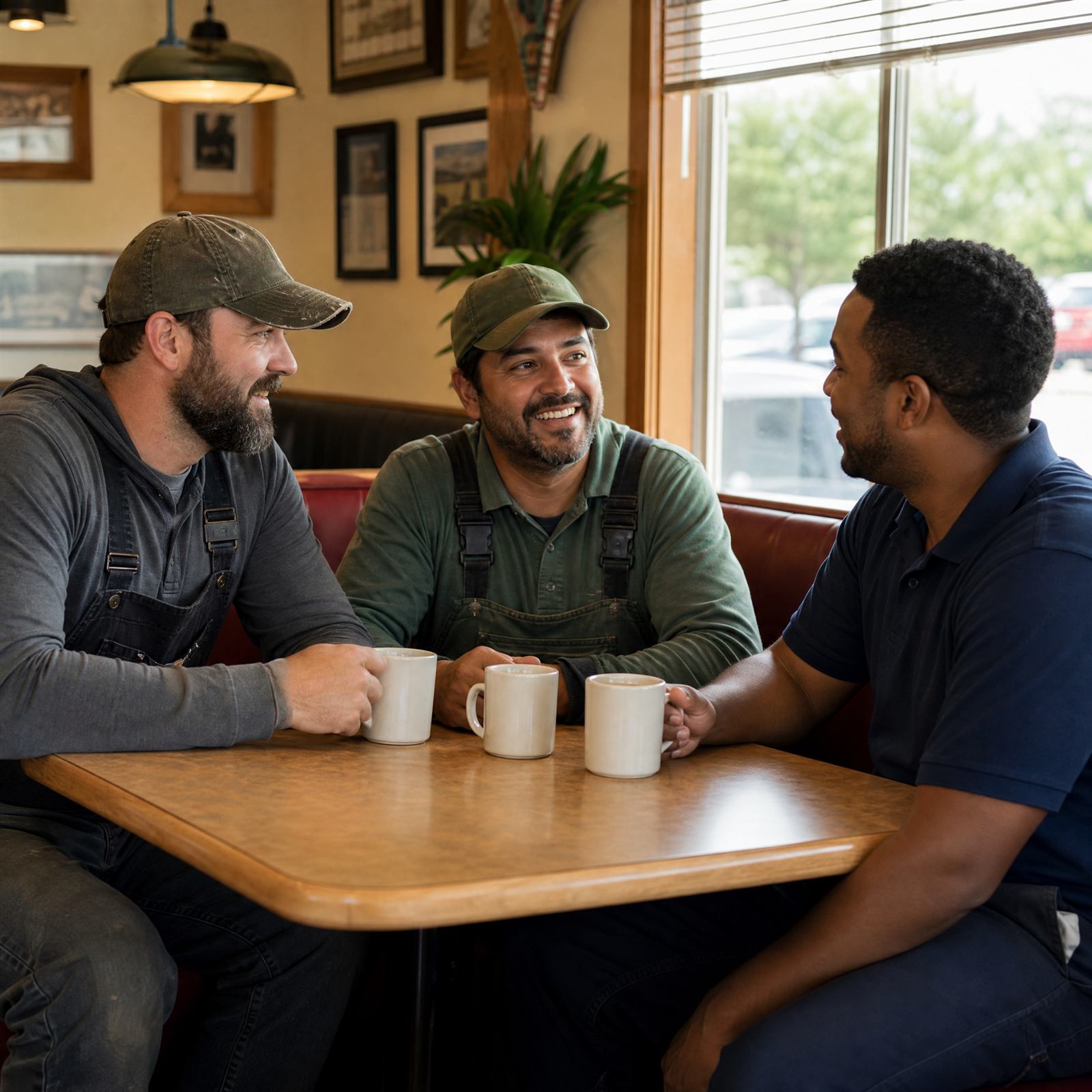
Picture the local diner: Ricky the Roofer, Lily the Landscaper, and Mike the Mover are having coffee, all complaining about the same thing — no leads online. Here's what each of them was getting wrong, and the GEO fix that turned it around.
Ricky's site had a 2,000-word page about roof repairs — a wall of text repeating "we are the best roofers" over and over.
The misunderstanding: Ricky thought long, rambling articles made him look like an expert.
The best practice: AI hates fluff. It looks for answer-atomic sections — a heading phrased as a question, immediately followed by a direct answer backed by real numbers.
The fix: Ricky rewrote the page with a clear heading: "How fast can we fix a leaky roof?" — directly below it: "Ricky's Roofing fixes emergency leaks in an average of 2 hours. In 2025, we successfully repaired 450 storm-damaged roofs."
The result: Adding relevant statistics and clear evidence was shown to meaningfully boost AI visibility in the same academic study. Now when a homeowner asks ChatGPT "who's the fastest roofer?", the AI reads Ricky's exact stats and recommends him.
Lily bought a package of 500 cheap backlinks from a shady agency, hoping it would make her look famous. She was nowhere to be found in Google's AI Overviews.
The misunderstanding: She thought AI engines only counted how many links pointed to her site.
The best practice: AI models learn from text, not just hyperlink graphs. They want brand mentions and entity authority — real humans talking about your business across the web.
The fix: Lily stopped buying spammy links. She sponsored a local community garden and asked happy customers to mention "Lily's Lawn Care" by name in local Facebook groups and on Nextdoor. She also added Schema markup to her site so the AI knew her exact business name and location.
The result: The AI noticed real people in her town naturally talking about "Lily's Lawn Care." Because brand mentions outweigh backlinks for GEO, it recognized her as a trusted local entity and started citing her as the best landscaper in the area.
Mike had a great website with solid prices, but ChatGPT didn't even know his business existed. He'd heard he needed to allow AI bots, so he told his web guy to allow "GPTBot." Still nothing.
The misunderstanding: Mike assumed GPTBot was the crawler for ChatGPT's search engine.
The best practice: Different bots do different jobs. GPTBot only crawls data to train future AI models. To actually show up in ChatGPT's live search answers, you need to allow a completely separate bot: OAI-SearchBot. (Claude works the same way — ClaudeBot for training, Claude-SearchBot for search.)
The fix: Mike updated his robots.txt file to welcome OAI-SearchBot and Perplexity's PerplexityBot, then checked his Cloudflare firewall to confirm it wasn't silently throwing a 429 at either one.
The result: Once the right bots were finally let in, they read his site. The following week, Mike's Moving Company became ChatGPT's top recommendation for local moves.
| Signal | Effect Found in the Research |
|---|---|
| Keyword stuffing | Actively lowers AI visibility across 10,000 tested queries. |
| Real statistics & evidence | Meaningfully boosts AI visibility when added to answer-atomic sections. |
| Backlinks alone | Weaker signal for AI citations than for classic Google ranking. |
| Brand mentions (forums, Reddit, reviews) | Correlates far more strongly with AI visibility than backlinks. |
| Lower-ranked sites adding citations & stats | Saw a dramatic increase in visibility — the equalizing effect small local businesses can use. |
"The future of home services isn't just about being listed — it's about being the trusted answer."
Your 2026 GEO action plan
Ready to get your home service business cited by AI? Follow this four-step plan.
- Open the technical gates. Call your website developer and tell them two things: update robots.txt to allow OAI-SearchBot (ChatGPT Search), PerplexityBot (Perplexity), and Claude-SearchBot (Claude); and check your Web Application Firewall logs to make sure it isn't handing those bots a 429 error.
- Restructure for answer-atomic reading. Stop writing giant paragraphs. Break your services page into short sections — an H2 heading phrased as a question your customer would actually ask, answered directly in the first sentence below it.
- Add real data and statistics. Don't say "lots of experience" — say "15 years of experience, 2,000 customers served in 2025." Numbers prove expertise and make the AI want to quote you.
- Build real brand mentions. Stop chasing old-school link building. Focus on digital PR and community presence — get your name mentioned naturally in local news, community forums, Reddit, and customer reviews.
DeployStaff builds GEO into your site — the technical bot access, the answer-shaped content, and the brand-mention strategy behind it.
See How AI Search Optimization WorksFlat fee, no long-term contracts. Get a free campaign plan.
Frequently Asked Questions
Get a free plan built around what's actually blocking your business from being cited right now.
Get a Free Campaign Plan$95/week per channel. See our AI Search Optimization service.
DeployStaff builds AI search visibility and paid media systems for local service businesses — flat-fee PPC, GEO/AI search optimization, and AI-powered booking.